Heat Pump vs. Central Air Conditioner: Which Is Better for San Diego Homes?
Choosing the right heating and cooling system is an important decision for San Diego homeowners. With warm summers, mild winters, and different climate conditions across the county, both heat pumps and central air conditioners can provide reliable indoor comfort.
However, they work differently, and the best choice depends on your home’s heating needs, existing HVAC equipment, energy efficiency goals, and budget.
If you’re considering a new HVAC system, understanding the differences between a heat pump vs. central air conditioner can help you make a more informed decision.
In this guide, Atlas HVAC Inc explains how both systems work, their advantages and disadvantages, installation costs, and which option may be better suited for San Diego’s climate.
What Is the Difference Between a Heat Pump and a Central Air Conditioner?
The main difference between a heat pump and a central air conditioner is how they handle heating.
- A central air conditioner cools your home by transferring heat from indoor air to the outdoors. It does not provide heating, so homeowners typically pair it with a furnace or another heating system.
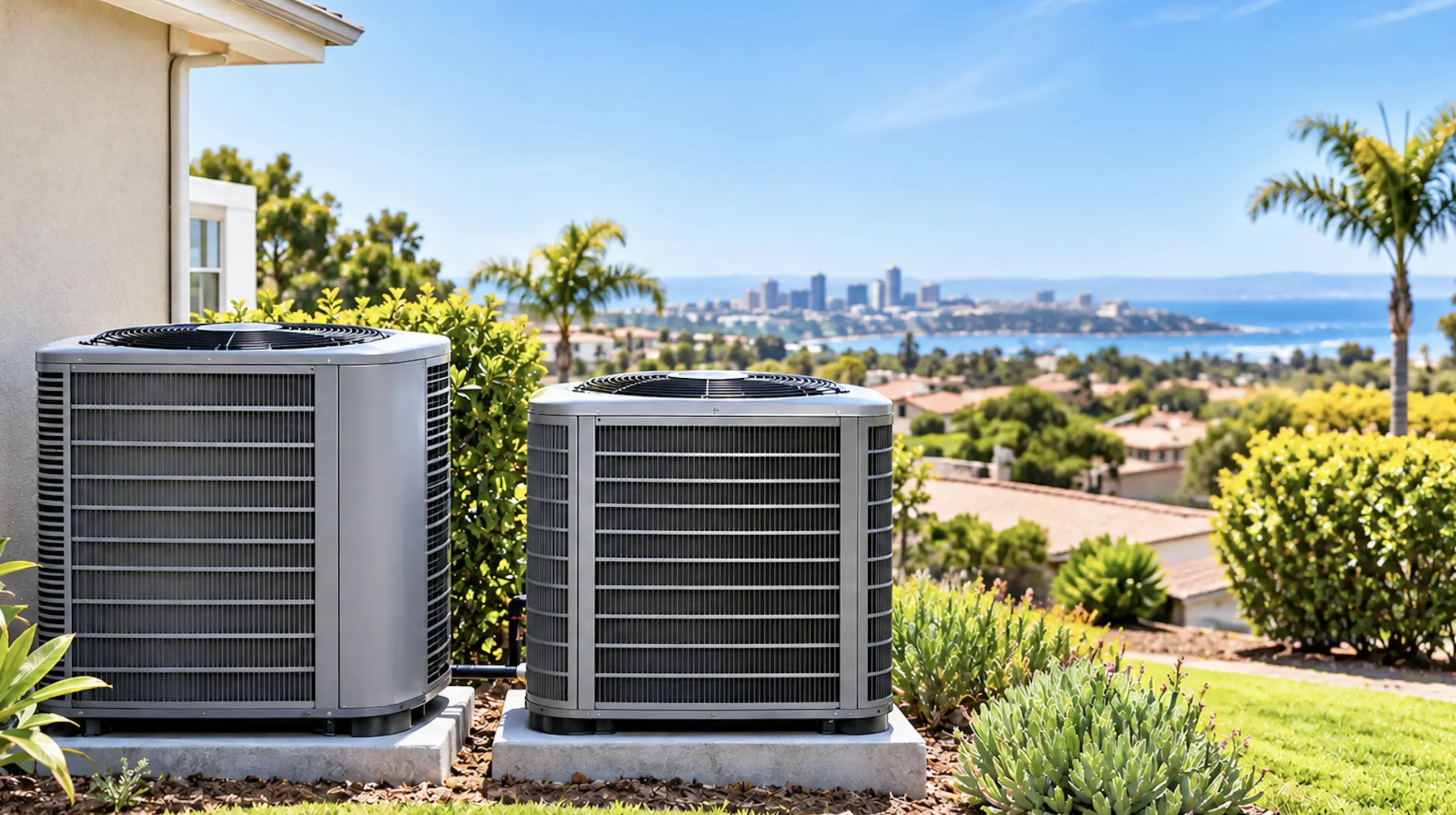
- A heat pump provides both heating and cooling using the same equipment. During summer, it operates much like a central air conditioner, removing heat from your home. During winter, it reverses the refrigeration cycle to transfer heat from the outdoor air into your home.
Both systems can use ductwork to distribute conditioned air throughout the house.
Heat Pump vs. Central AC: Quick Comparison
| Feature | Heat Pump | Central Air Conditioner |
| Cooling | Yes | Yes |
| Heating | Yes | No |
| Energy source | Electricity | Electricity |
| Requires separate heating equipment | Usually no | Yes, if heating is needed |
| Cooling efficiency | Depends on model | Depends on model |
| Heating efficiency | Highly efficient in mild climates | Depends on separate heating system |
| Installation cost | Often higher for comparable equipment | Often lower for AC-only replacement |
| Best suited for | Homes needing both heating and cooling | Homes with an existing functional heating system |
For many San Diego homeowners, the biggest advantage of a heat pump is its ability to provide year-round comfort without requiring a separate furnace.
How Does a Heat Pump Work in San Diego?
Heat pumps use refrigerant and a compressor to move heat rather than generate it directly through electric resistance.
During warmer months, a heat pump removes heat from indoor air and releases it outdoors. When outdoor temperatures drop, the system reverses direction and transfers available outdoor heat into your home.
Because San Diego generally experiences mild winters, modern air-source heat pumps can operate efficiently throughout much of the year.
Benefits of Installing a Heat Pump
- Heating and Cooling in One System
A heat pump provides air conditioning during summer and heating during winter, making it a practical all-in-one HVAC solution.
- Energy-Efficient Heating
Heat pumps transfer heat rather than generate it through electric resistance, which can significantly reduce electricity consumption compared with traditional electric resistance heating.
- Well-Suited for Mild Winters
San Diego’s relatively moderate winter temperatures create favorable conditions for air-source heat pump operation.
- Reduced Dependence on Natural Gas
An all-electric heat pump system can eliminate the need for a gas furnace for space heating, depending on the home’s configuration.
- Year-Round Indoor Comfort
Modern variable-speed heat pumps can provide precise temperature control, quieter operation, and more consistent indoor comfort.
How Does a Central Air Conditioner Work?
A central air conditioning system removes heat and moisture from indoor air using a refrigeration cycle. The cooled air is distributed throughout the home through ductwork.
Central AC systems are commonly paired with gas furnaces in San Diego homes, allowing homeowners to use separate equipment for cooling and heating.
Benefits of Central Air Conditioning
- Reliable Whole-Home Cooling
Central air conditioners provide consistent cooling throughout homes with properly designed ductwork.
- Familiar HVAC Configuration
Many San Diego homes already have central AC and furnace systems, making equipment replacement relatively straightforward.
- Potentially Lower Replacement Costs
If your existing furnace is in good condition, replacing only the air conditioner may cost less than converting to a heat pump.
- Multiple Efficiency Options
Modern central air conditioners are available in different efficiency ratings, including high-efficiency variable-speed models.
- Compatibility With Existing Heating Equipment
A new central AC system may be compatible with your current furnace and ductwork, depending on equipment specifications.
Heat Pump vs. Central Air Conditioner: Which Is More Energy Efficient?
Both heat pumps and central air conditioners can provide excellent cooling efficiency when properly sized and installed.
Cooling efficiency is commonly measured using SEER2 (Seasonal Energy Efficiency Ratio 2). Higher SEER2 ratings generally indicate greater seasonal cooling efficiency.
Heat pumps also have a heating efficiency rating called HSPF2 (Heating Seasonal Performance Factor 2). Higher HSPF2 ratings indicate more efficient seasonal heating performance.
When comparing a heat pump and central air conditioner with similar SEER2 ratings, their cooling electricity consumption may be relatively similar.
The biggest difference often comes from heating.
A heat pump can deliver more heat energy than the electrical energy it consumes because it transfers existing heat. This makes it particularly attractive in moderate climates such as coastal San Diego.
However, whether a heat pump costs less to operate than a gas furnace depends on local electricity and natural gas rates, equipment efficiency, and household usage.
Heat Pump vs. Central AC Installation Cost in San Diego
Installation cost is one of the most important factors when choosing between a heat pump and central air conditioner.
The final price depends on the equipment brand, system capacity, efficiency rating, installation complexity, and condition of the existing HVAC infrastructure.
Estimated Installation Costs
| HVAC System | Approximate Installed Cost |
| Central AC replacement | 5,000–10,000 |
| High-efficiency central AC | 7,000–13,000 |
| Ducted heat pump installation | 7,000–15,000 |
| High-efficiency heat pump system | 10,000–18,000+ |
| Complete central AC and furnace replacement | 9,000–18,000+ |
These are broad planning estimates, not verified Atlas HVAC quotes or guaranteed San Diego market prices. Actual costs may fall outside these ranges depending on equipment, electrical work, ductwork, permitting, and installation requirements.
Although heat pumps may have higher upfront costs than AC-only replacements, they provide both heating and cooling.
Homeowners replacing an entire HVAC system should compare the cost of a heat pump against the combined cost of installing a new central air conditioner and furnace.
Atlas HVAC Inc provides free estimates to help San Diego homeowners evaluate replacement options based on their property’s requirements.
Is a Heat Pump Better for San Diego’s Climate?
San Diego’s climate makes heat pumps an attractive option for many residential properties.
However, heating and cooling requirements vary considerably throughout the county.
Coastal San Diego: La Jolla, Del Mar, and Pacific Beach
Coastal neighborhoods generally experience moderate temperatures throughout the year.
A heat pump can be an excellent choice because it provides efficient heating during mild winters and reliable cooling during warmer months.
Inland San Diego: Poway, Santee, and El Cajon
Inland communities often experience hotter summer temperatures and greater seasonal temperature differences.
Both heat pumps and central air conditioners can work effectively in these areas.
Homeowners should prioritize correct equipment sizing, cooling capacity, and system efficiency to maintain comfort during extended periods of hot weather.
Carmel Valley, Mira Mesa, and Rancho Bernardo
These communities experience warm summers and cooler winter evenings.
A properly sized heat pump can provide effective year-round heating and cooling, while a central AC and furnace combination may also be practical for homes with existing gas heating equipment.
The best solution depends on the property’s insulation, ductwork, equipment condition, and household comfort preferences.
When Should You Choose a Heat Pump?
A heat pump may be the better choice if:
- You need to replace both your heating and cooling equipment.
- You want one system that provides year-round comfort.
- You are interested in switching from gas heating to an electric system.
- Your home is well suited for heat pump installation.
- You want to explore high-efficiency heating options.
- You are planning a major HVAC upgrade or renovation.
For homeowners replacing an aging furnace and air conditioner simultaneously, a heat pump is worth considering.
When Is a Central Air Conditioner the Better Choice?
A central air conditioner may be more practical if:
- Your existing furnace is relatively new and operating efficiently.
- You only need to replace your cooling equipment.
- You prefer to retain your current gas heating system.
- Your existing HVAC configuration supports a straightforward AC replacement.
- You want to minimize initial installation costs.
In these situations, replacing the central air conditioner while keeping the existing furnace may provide the best value.
Another option is a dual-fuel HVAC system, which combines an electric heat pump with a compatible gas furnace. This configuration allows the system to switch between heating sources based on outdoor conditions or operating costs.
Professional Heat Pump and Central AC Installation in San Diego
Atlas HVAC Inc has served San Diego County since 2010, providing professional residential and commercial heating and cooling services.
Our NATE-certified technicians help homeowners select, install, replace, and maintain HVAC systems designed for dependable performance.
Our HVAC services include:
- Heat pump installation and replacement
- Central air conditioning installation
- HVAC system replacement
- Furnace installation and replacement
- Ductless mini-split installation
- HVAC repair and maintenance
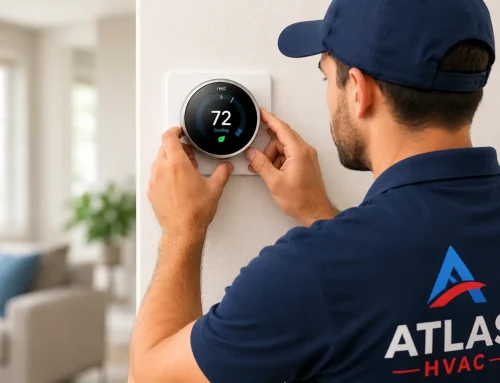
- Thermostat installation and upgrades
Whether you’re upgrading an outdated air conditioner or considering a complete heating and cooling replacement, our team can help determine the right system for your property.
Frequently Asked Questions
Are heat pumps good for San Diego homes?
Yes. San Diego’s mild winters make air-source heat pumps a practical heating and cooling option for many homes. Proper sizing, equipment selection, and installation are essential for reliable performance.
Is a heat pump cheaper to run than central air conditioning?
When cooling, similarly rated heat pumps and central air conditioners can have comparable operating costs. Heating costs depend on the efficiency of the heat pump compared with the home’s alternative heating system and local energy rates.
Can a heat pump replace my furnace and air conditioner?
Yes. A properly designed heat pump system can replace both a furnace and central air conditioner in many San Diego homes. Some properties may require electrical or ductwork modifications.
Do heat pumps work during hot San Diego summers?
Yes. Modern heat pumps operate as air conditioners during summer and can provide effective cooling even in hot inland communities when correctly sized.
How long do heat pumps and central air conditioners last?
Both systems commonly last around 10–15 years or longer, depending on usage, maintenance, installation quality, and environmental conditions. Coastal salt exposure and heavy operation can affect equipment longevity.
Are there rebates for heat pump installation in San Diego?
Rebates and incentives may be available through utility programs, state initiatives, or other qualifying programs. Eligibility, funding, and program requirements can change, so homeowners should verify current offers before purchasing equipment.
Need help choosing between a heat pump and central air conditioner in San Diego?
Contact Atlas HVAC Inc for a professional evaluation and free installation estimate.
Call (619) 505-3794 to discuss your HVAC installation or replacement project.